Regulation without Representation
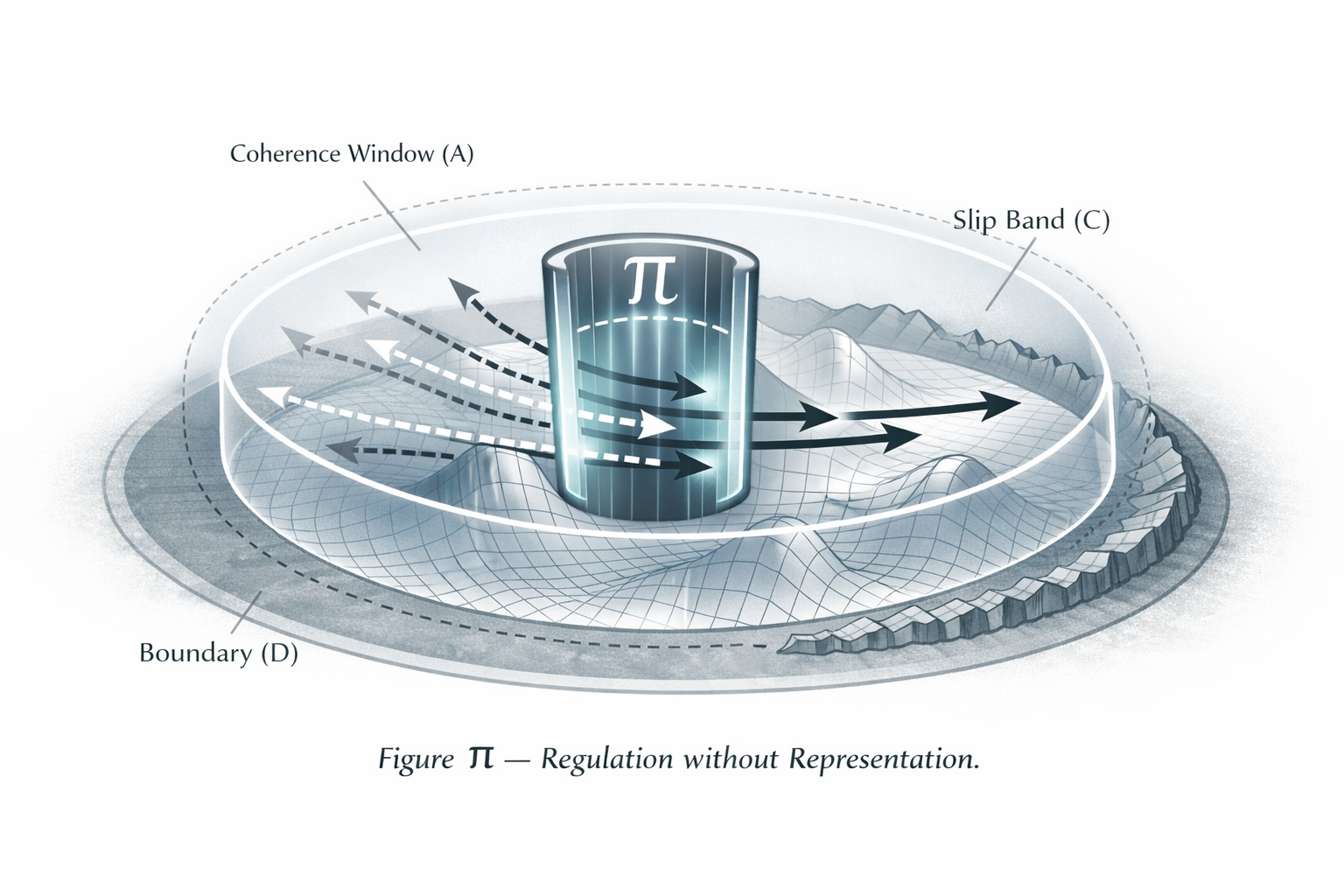
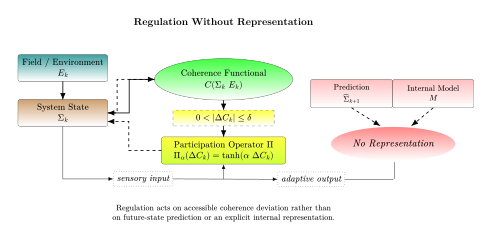
Bounded coherence regulation can maintain viability without an internal model, symbolic description or future-state prediction.
THE ARCHITECTURE OF REALITY · PAPER II
An Architectural Framework for Coherence-Regulated Reality
ABSTRACT / POSITION
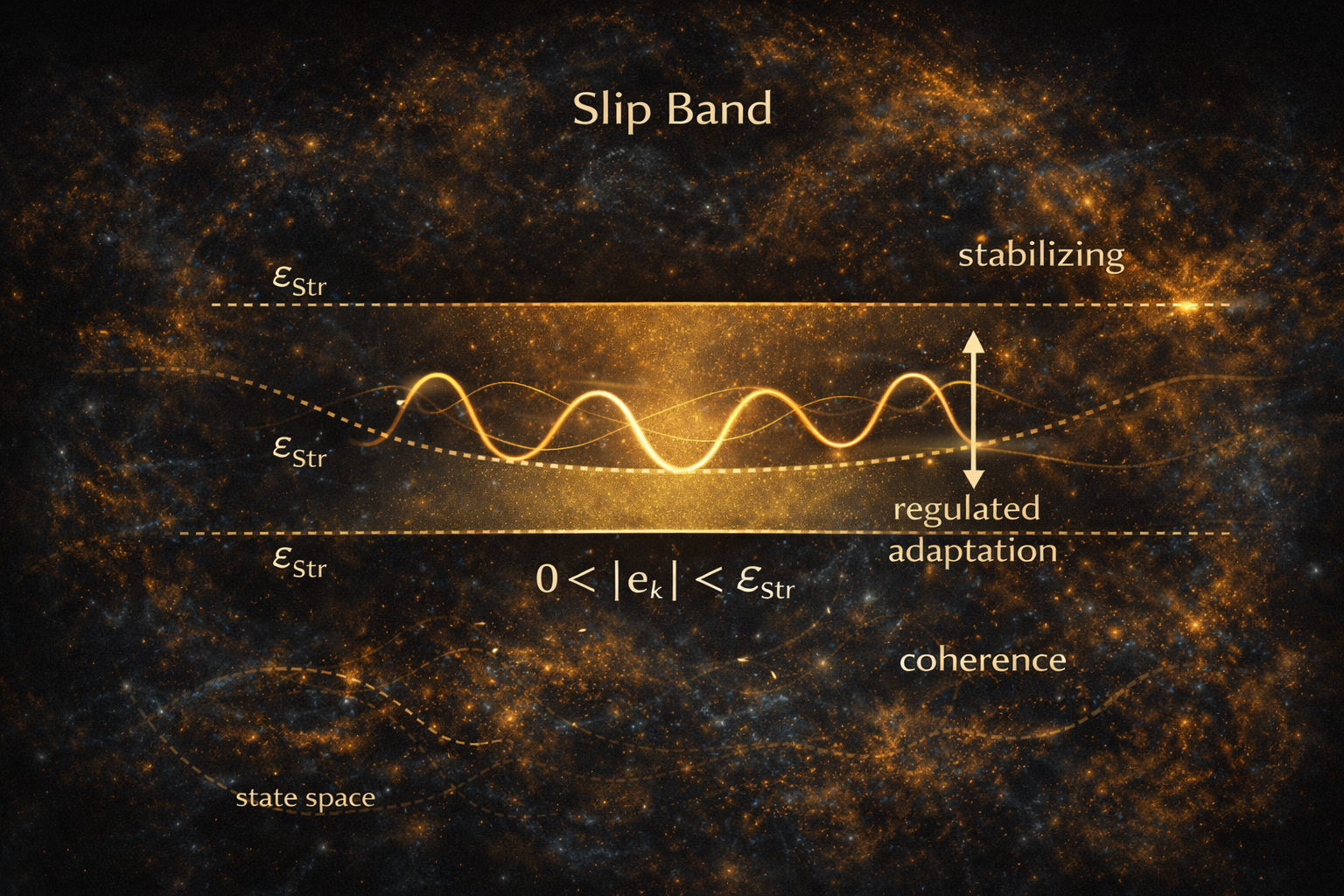
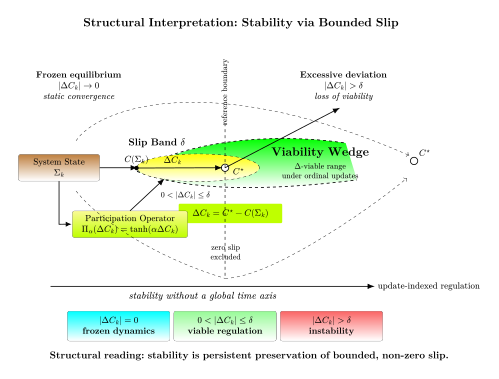
CRBT is a time-free architectural framework for systems whose persistence depends on bounded coherence regulation rather than convergence to static equilibrium. Adaptive systems remain viable not by eliminating deviation, but by preserving coherence within a non-zero slip band.
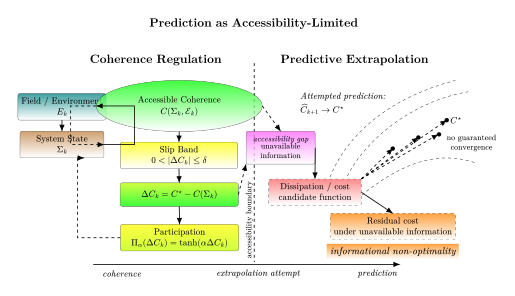
The theory does not reject prediction. It treats prediction as local, scale-dependent and limited by informational accessibility. Regulation can remain viable where global extrapolation cannot, because it acts on accessible coherence deviation rather than requiring a complete future-state model.
Persistent band-preservation, not stillness or exact convergence.
A necessary degree of freedom between frozen order and loss of viability.
A bounded, non-predictive selection rule acting on present coherence deviation.
CONCEPT FILM · 04
A visual introduction to the central CRBT proposition: stability is neither exact convergence nor unrestricted variation, but the persistent preservation of a viable, non-zero band of regulated deviation.
Download film ↓CANONICAL OPERATOR Π
Π resolves a regulated landscape into a viable configuration. It does not optimize a future trajectory or assign meaning; it maps accessible deviation into a bounded response.
The tanh response is illustrative rather than exclusive: the architectural requirement is a smooth, bounded and locally sensitive response.
CANONICAL ARCHITECTURE
The paper is deliberately articulated at two resolutions: a progressive conceptual argument and a compact C1–C4 architectural restatement.
Bounded coherence regulation can maintain viability without an internal model, symbolic description or future-state prediction.
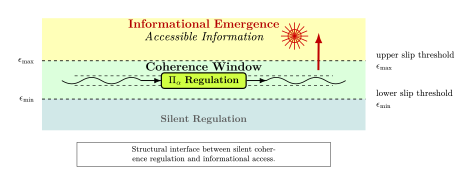
Slip is not simply noise or failure. It is the bounded interface through which previously silent deviation becomes structurally accessible.
Prediction remains useful locally, but cannot be assumed globally when the informational state needed for extrapolation is itself resolution-conditioned.
Persistent stability arises through repeated local regulation and mutual compatibility, not necessarily through convergence to a static endpoint.
C1–C4 / DIAGRAMMATIC READING
The TikZ figures are preserved as sharp vector graphics for close reading on screen.
CROSS-SCALE INVARIANCE
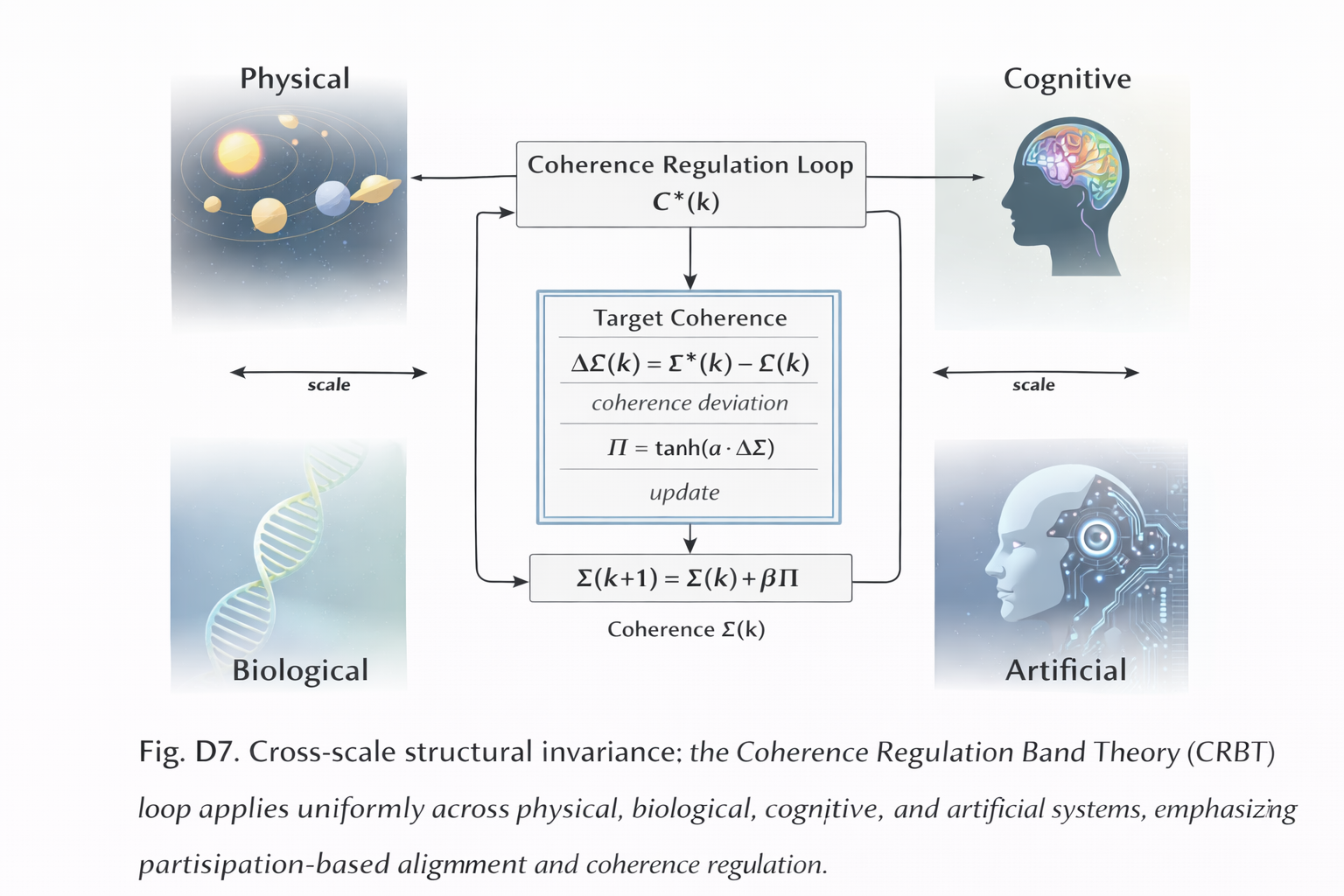
The paper proposes the coherence-regulation loop as an architectural form that can be instantiated across physical, biological, cognitive and artificial systems. This is a structural comparison, not a claim that these domains share identical mechanisms.
BRIDGE TO PAPER III
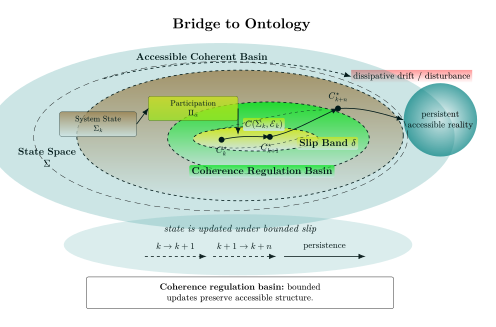
The closing bridge asks when a configuration remains structurally accessible across ordinal updates. Persistence is interpreted as continued reachability within a bounded coherence basin, preparing the transition from regulation to information, fields and matter.
The figure expresses an architectural interpretation of persistence; it does not define reality as a substance or present empirical validation.
SCOPE & BOUNDARIES
CRBT generalizes familiar concerns from feedback, nonlinear dynamics and viability without presenting itself as a replacement for those theories.
PUBLICATION RECORD
Jandó, G. (2026). Coherence Regulation Band Theory: An Architectural Framework for Coherence-Regulated Reality [Preprint]. Zenodo.
Paper II turns coherence regulation into the primary object of study—and prepares the move from stable accessibility to information and material persistence.
Open the complete preprint on Zenodo ↗