BIO
Chemical, Biological and Relational Organization
Coherence regulation extends into molecular bonding, living systems and relational organization.
PlannedResearch
A five-paper research program tracing the architecture of persistence from observation and coherence regulation to matter, life and agency.
PROGRAM MAP
The program advances from observation and coherence regulation through physical realization and biological embodiment toward agency.
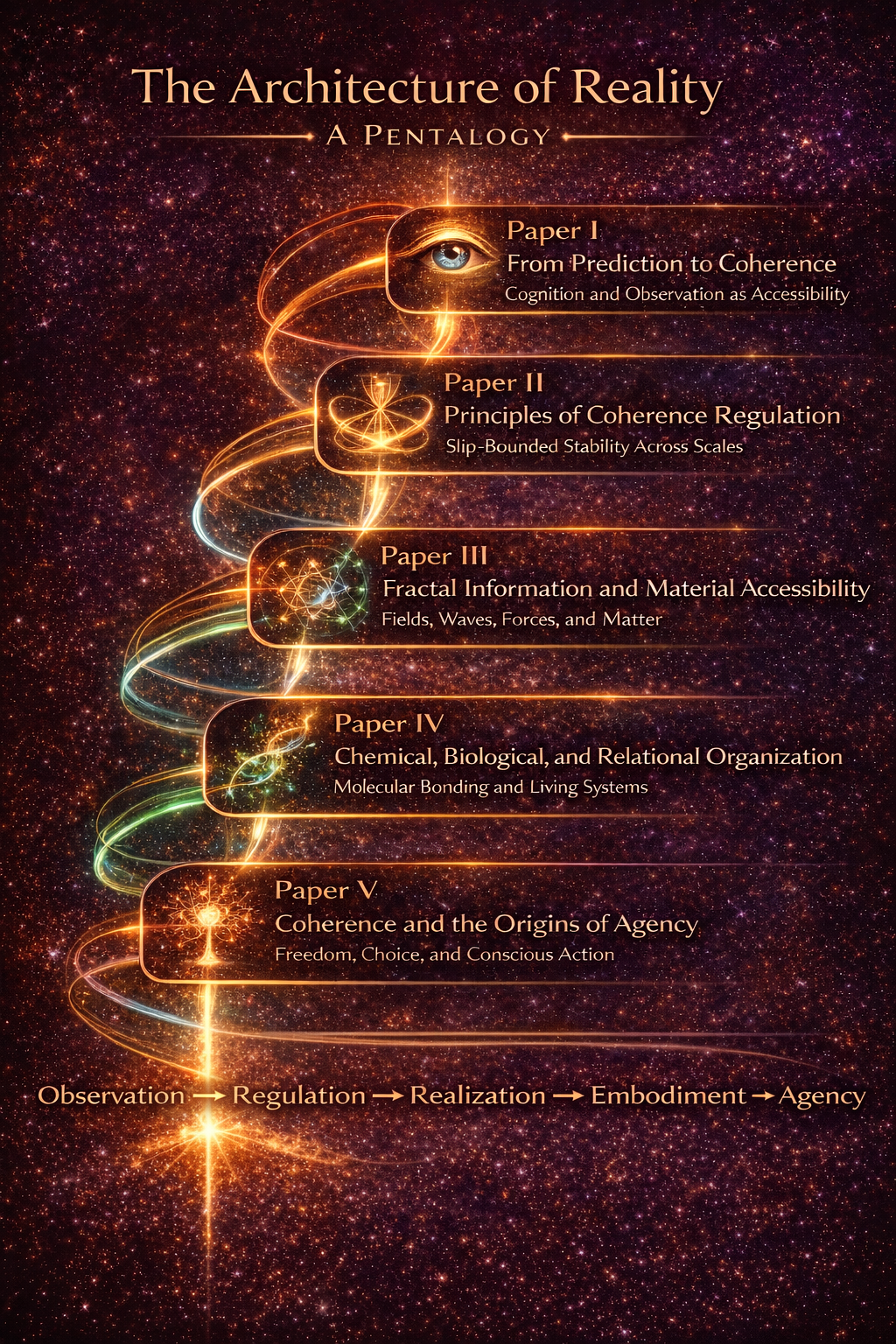
Coherence-regulated wave dynamics establish a relational account of temporal ordering, observation and phase re-accessibility.
Published · 2026 · Explore →IIBounded regulation and viable slip sustain dynamically preserved stability across ordinal updates.
Published · 2026 · Explore →IIIThe framework advances from regulated accessibility toward fields, information and persistent material structure.
Published · 2026 · Explore →Coherence regulation extends into molecular bonding, living systems and relational organization.
PlannedThe final movement develops freedom, choice and conscious action from the preceding architecture.
PlannedPAPER I / VISUAL ARCHITECTURE
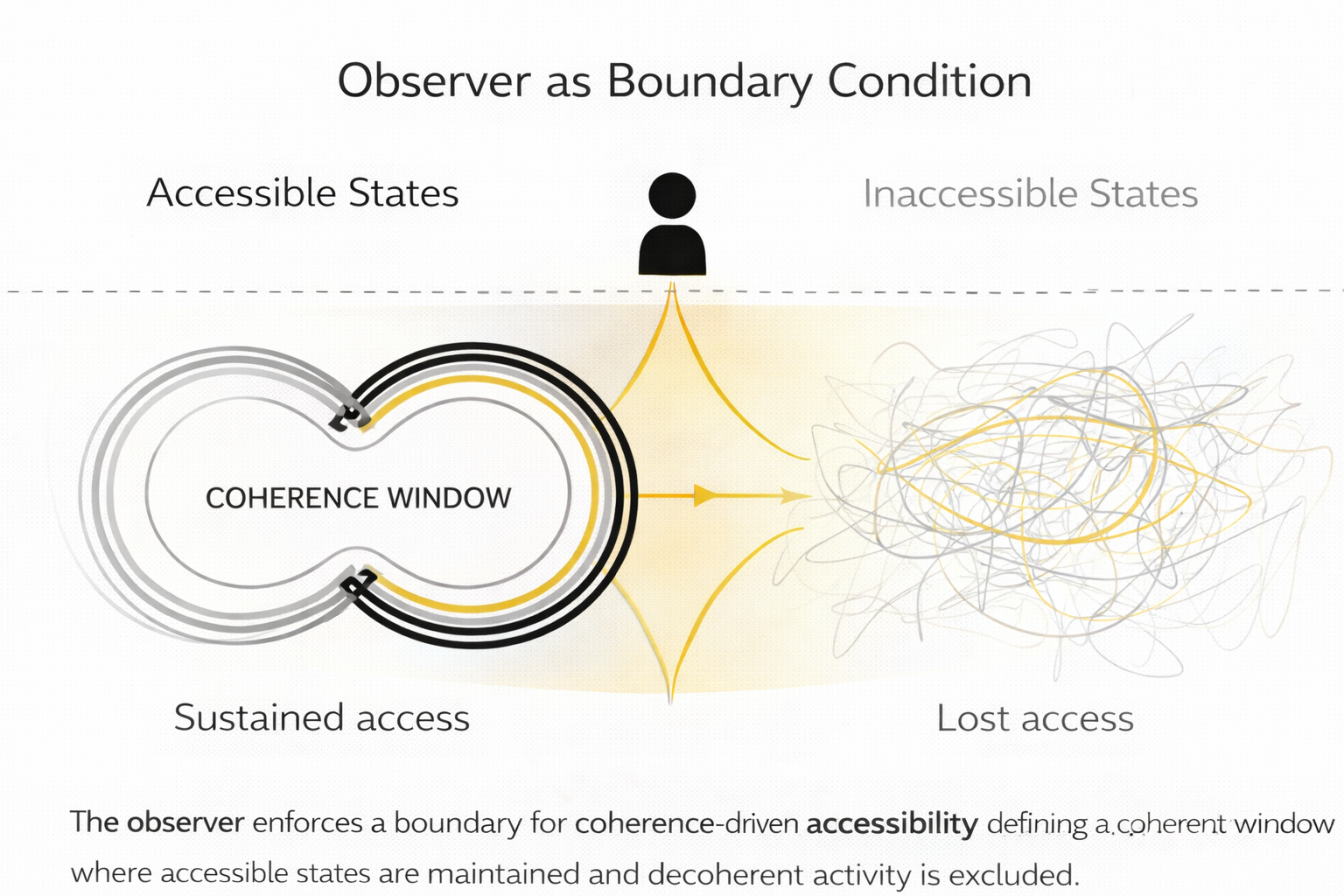
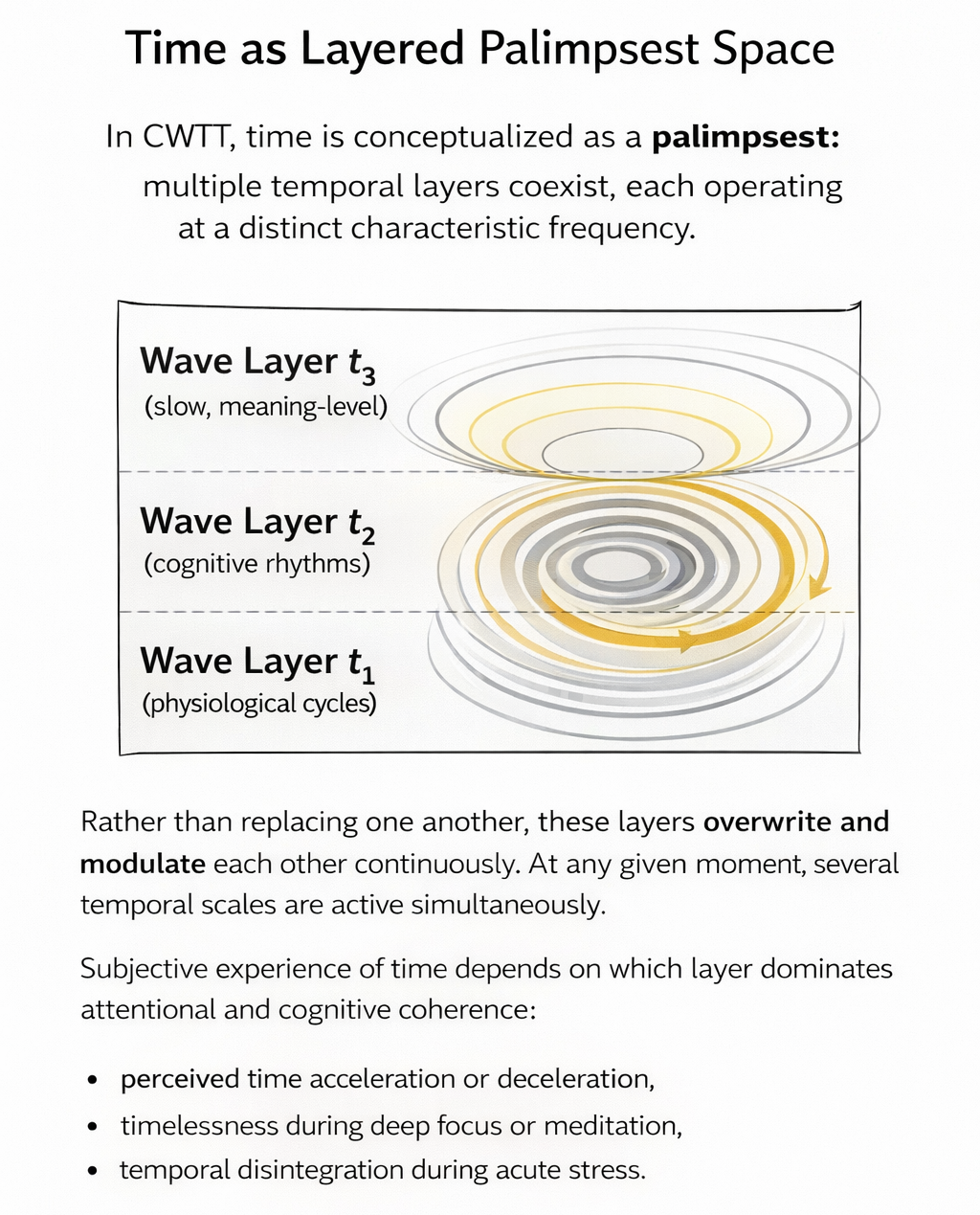
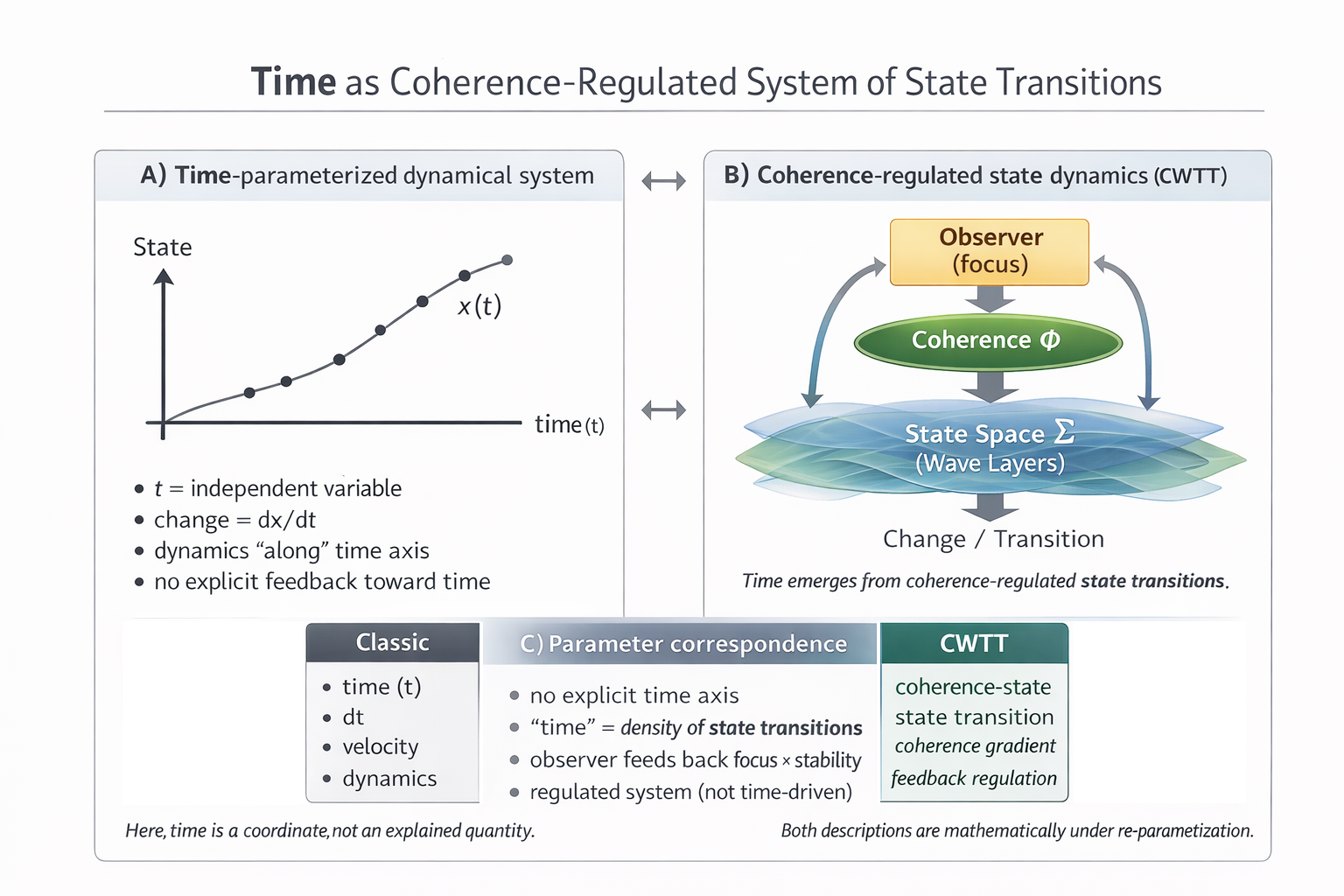
Selected diagrams from Paper I. Each plate isolates a different relation between observation, accessibility and emergent time.
CORE QUESTION
How does a system preserve identity through continuous change?
The program treats coherence, deviation, recovery, memory and accessibility as coupled architectural conditions.